27th June 2025
Author: xq
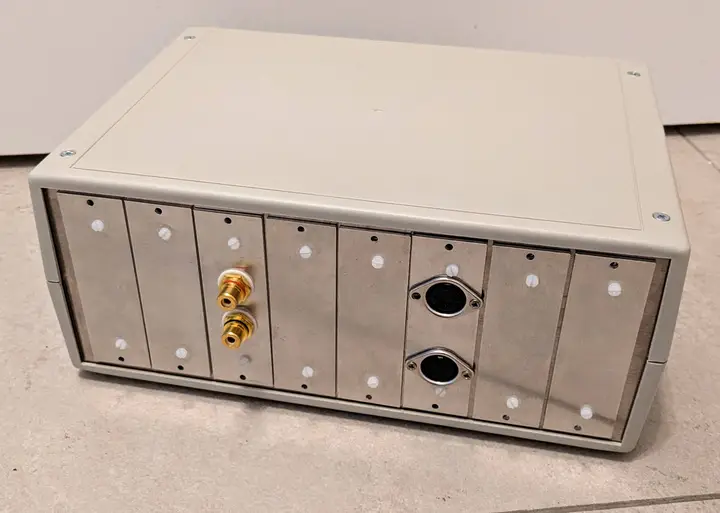
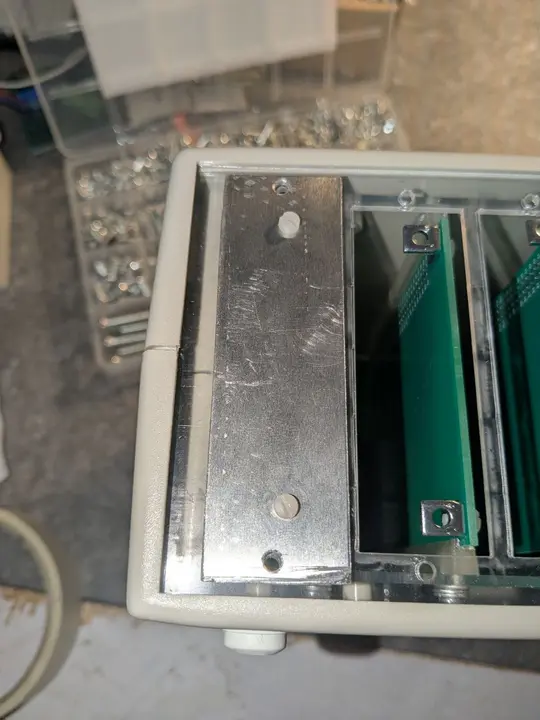
After searching through my part collection in my lab, I’ve found two types of connectors that would suit the front panels of the case mockup fairly well:
This made me order more parts i can put into the front panel.
20th June 2025
Author: xq
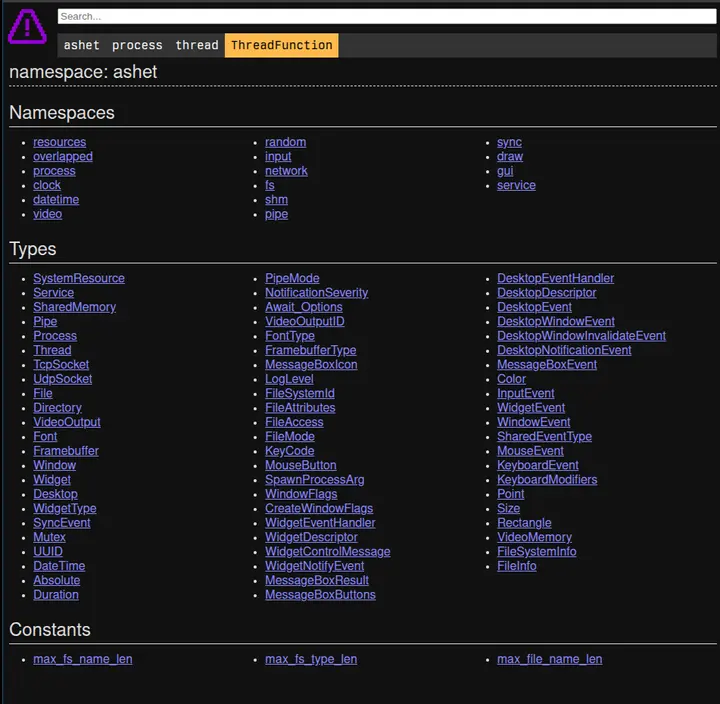
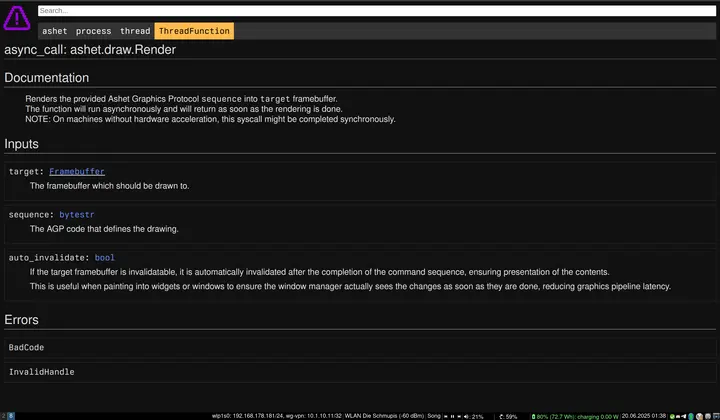
As I’ve grown tired of sending people raw code blocks to talk about the API, I started working on a web documentation generator:
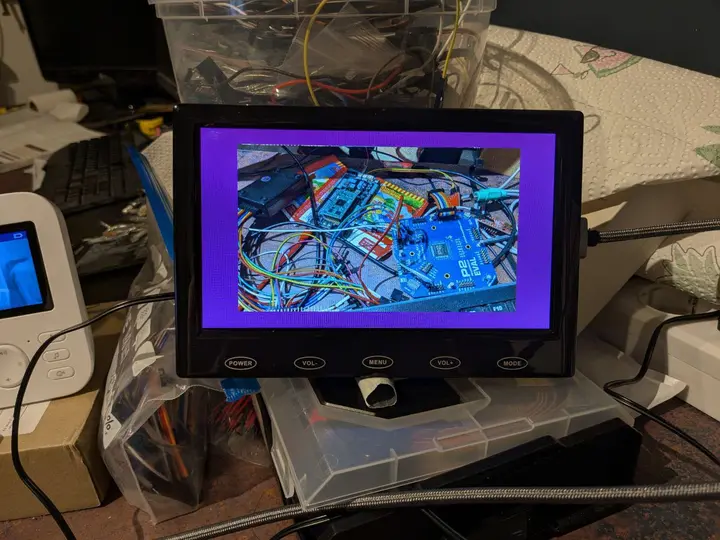
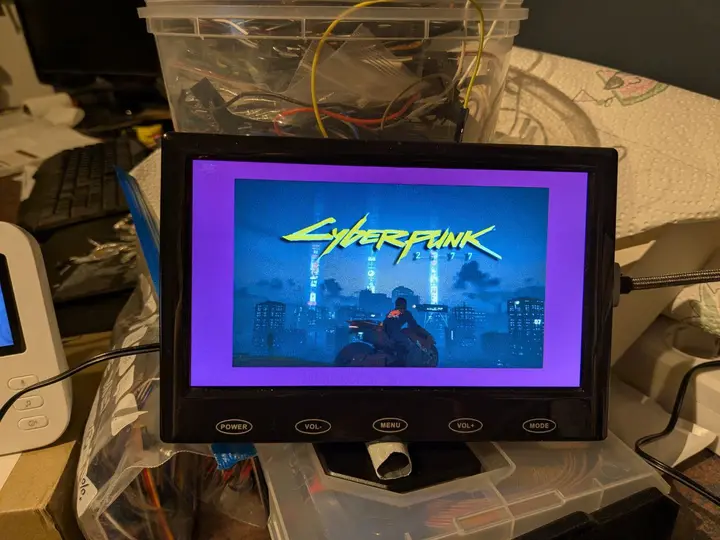
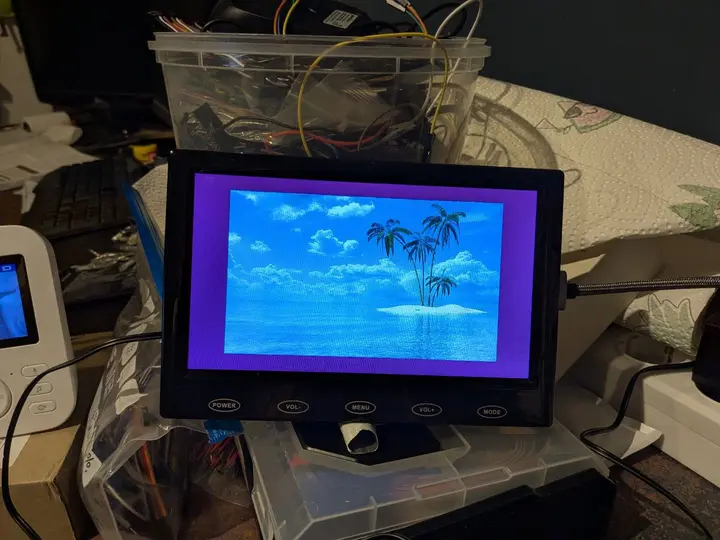
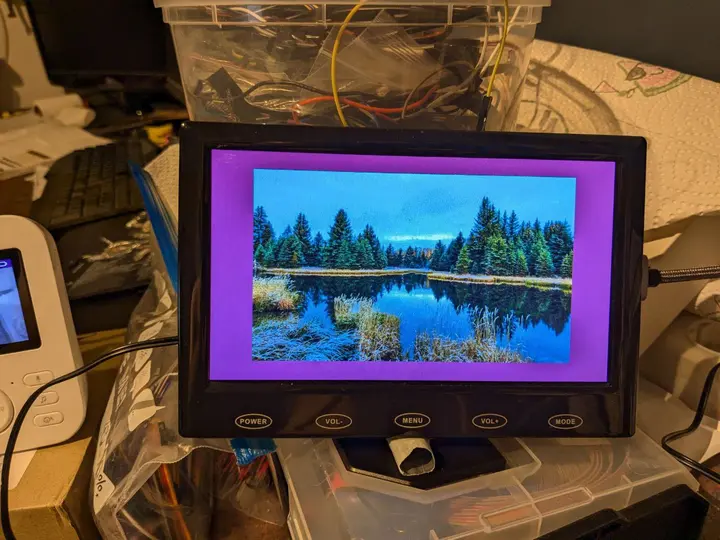
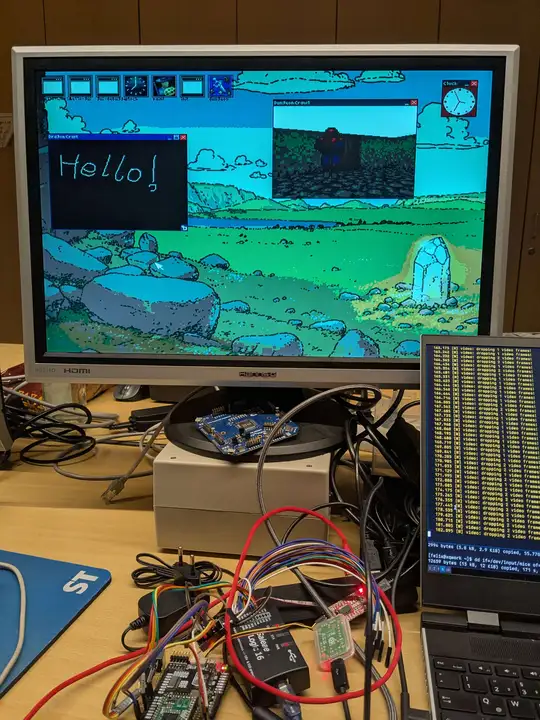
After a long time of tinkering, I’ve successfully implemented a 640x400 video mode with 8 bpp on the RP2350.
But this time we have a custom palette and way more memory bandwidth than before!
Took me some time to get all the timings correctly. This isn’t integrated into Ashet OS yet, but that’s the next step. But this is huge, as we can now use a custom palette.
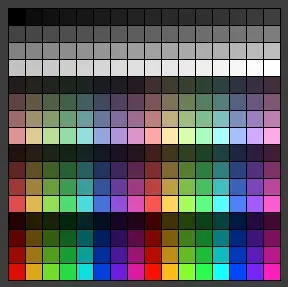
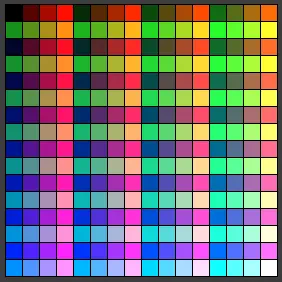
The palette I use now is called “HSV332m” where “m” stands for modified:
It’s a mathematical palette, so you can compute the palette index based off RGB values (or even better: HSV values).
It encodes 3 bits of hue (so we get 8 shades of color), 3 bits value (so we get 9 brightness levels) and 2 bits of saturation, so we can have grayscale, pastel and full bright colors.
The trick is that the encoding scheme uses two modifications:
- The 3 bits for value are mapped to [12.5%, …, 50%, …, 87.5%, 100%], so we do not map
value=0 to black, but to “dark”. - The 2 bits for saturation work as expected, but use another modification:
saturation=0 would yield the same colors for any hue for a given value. This means, we have 6 bits (64 values) which can be mapped to 8 shades of gray. This isn’t optimal. So we switch the encoding of hue and value when saturation=0 into a linear, 64-shade grayscale ramp.
This way we get a really large grayscale shade, which is cool. Also we get 8 hues in 8 shades + black (s=0, hv=0). This should yield fairly good results overall for most images:
More work on the PS/2 front:
After making the PS/2 communication work in general, i’m now porting the x86-specific drivers in Ashet OS into a more generic framework, so i can use them with the Southbridge setup.
Result: We’re having comms, Sire!
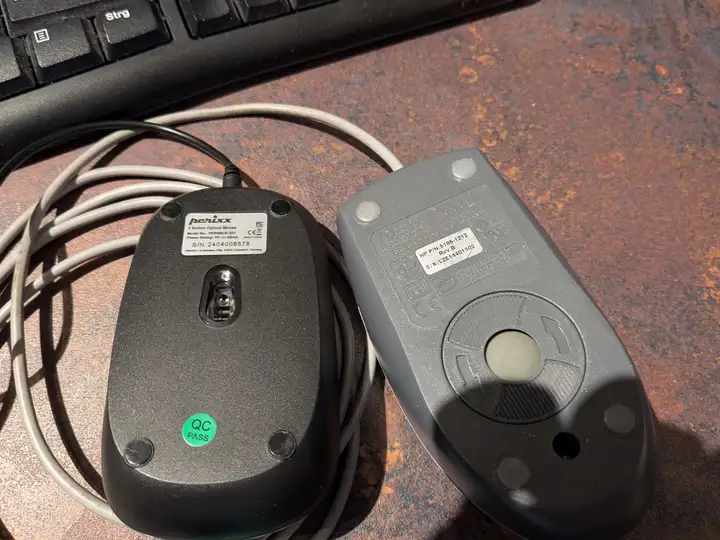
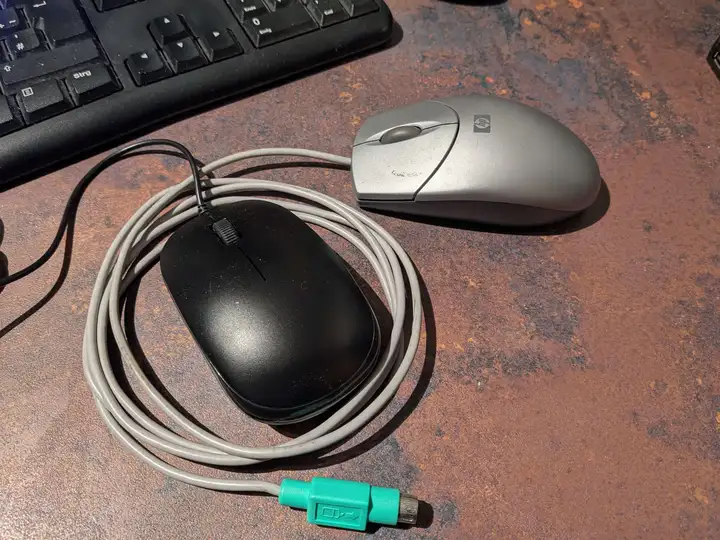
I’m testing with two really different mice, one is brand new, the other one so old that HP doesn’t know that they’ve built it in the past.
At this day, there was an offer on Amazon for the HP mouse for only 70 €. Retro stuff is really getting expensive.
Another validation milestone was successfully unlocked!
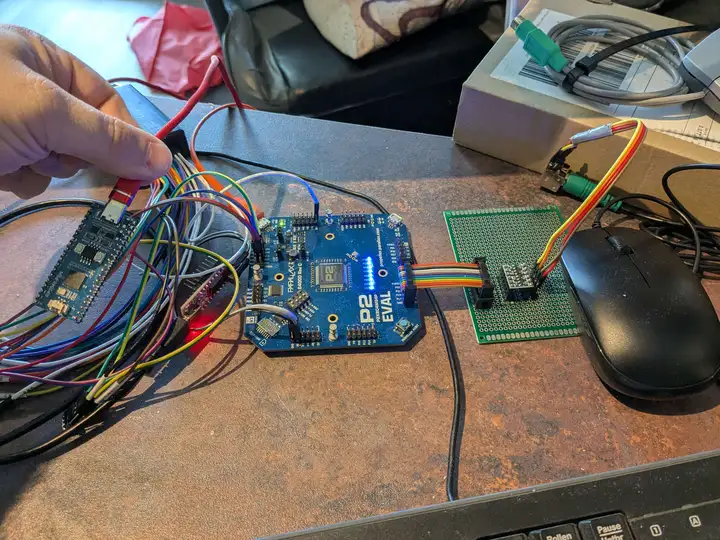
On the photo you can see the chain of connections:
- Left: A Raspberry Pi Pico clone, playing the role of the Southbridge dongle, connected to my laptop.
- Center left: The Southbridge / back plane in the form of the P2-EVAL board.
- Center right: The “expansion card” which provides the electrical interface.
- Right: A PS/2 mouse.
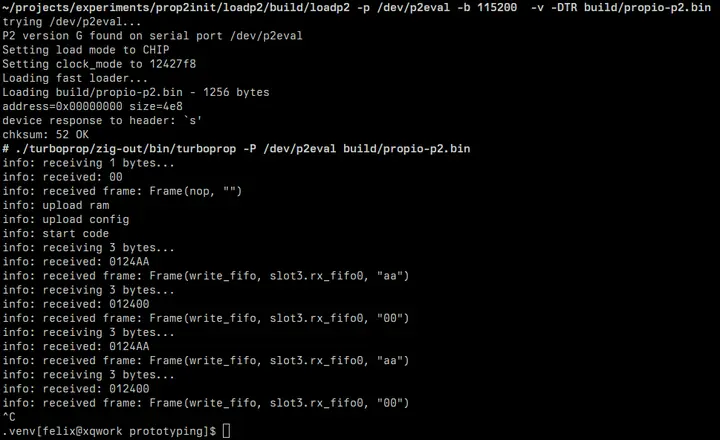
In the log screenshot you can see how Southbridge firmware is uploaded with loadp2, then my southbridge-pchost takes over, plays a nice animation on the LEDs and uploads a new module into the Southbridge, using SLOT 3:
Afterwards, the configuration is uploaded for the FIFOs between the Southbridge controller and the module slot, and the module is started.
Then the module starts communicating PS/2 with the connected mouse and periodic AA 00 messages by the mouse can be seen.
This means, my Southbridge concept is viable and works. I can even change the slot to SLOT 5 and change the plug position of the expansion port and it will magically work. Just making two of the expansion card adapters and i can use up to 4 PS/2 devices already.
Hell yeah!
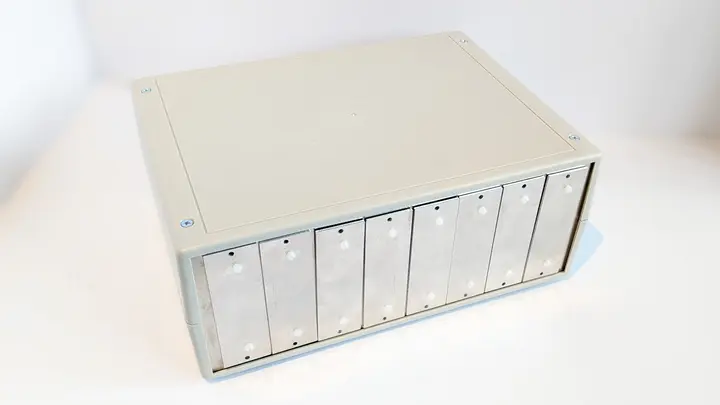
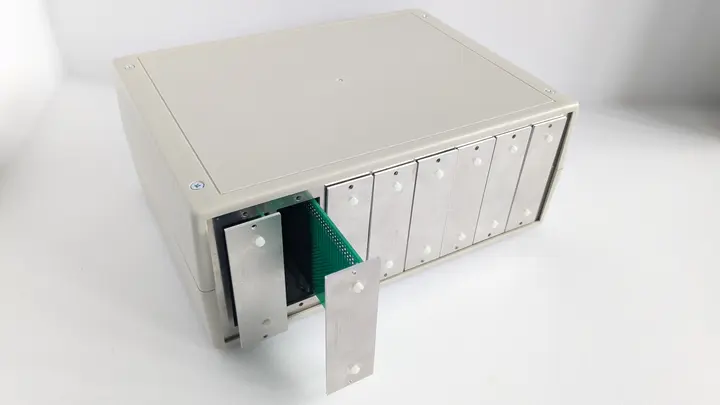
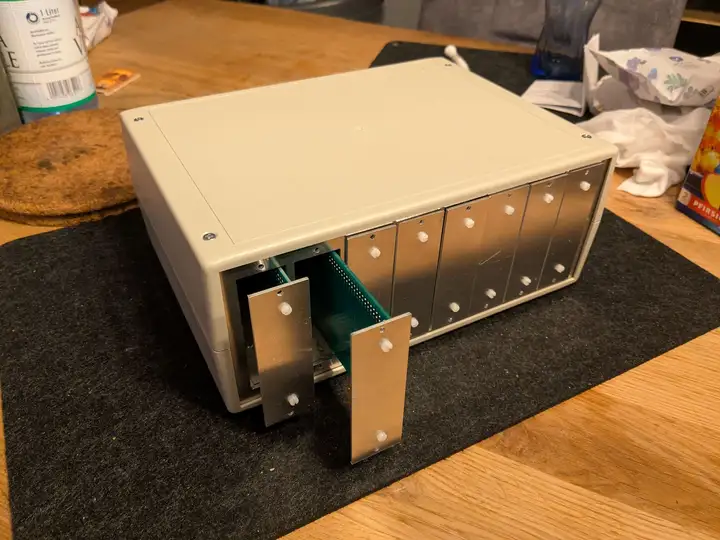
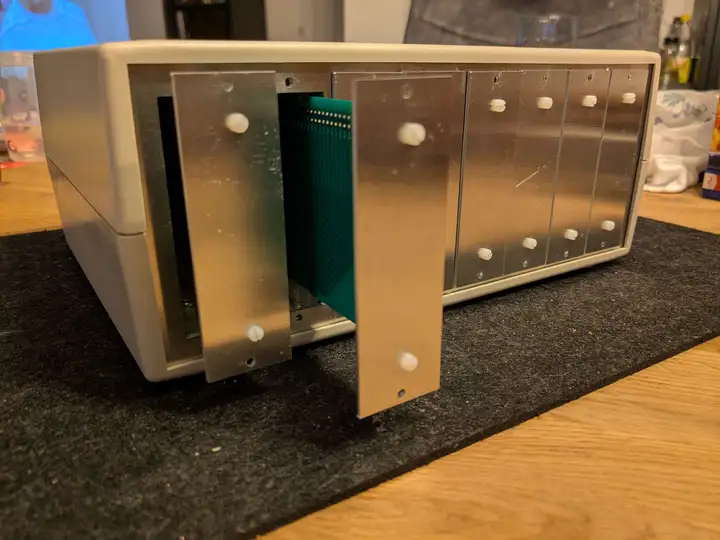
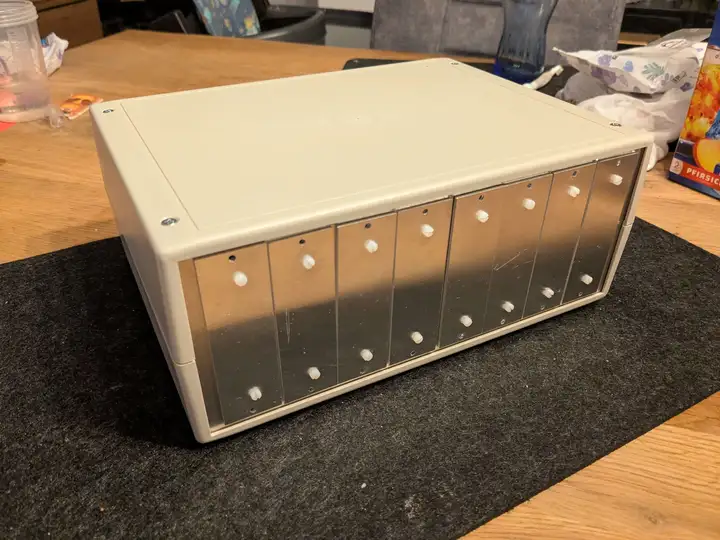
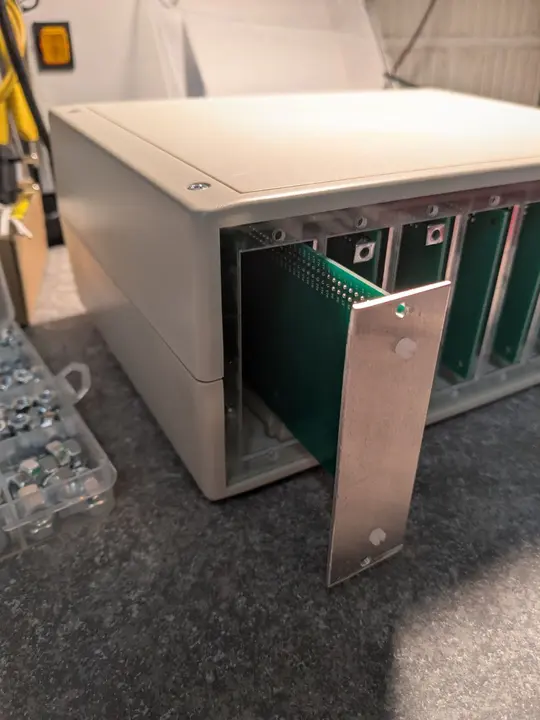
Made some better photos of the case:
The design really looks neat with the metal front plates and the beige casing.
19th April 2025
Author: xq
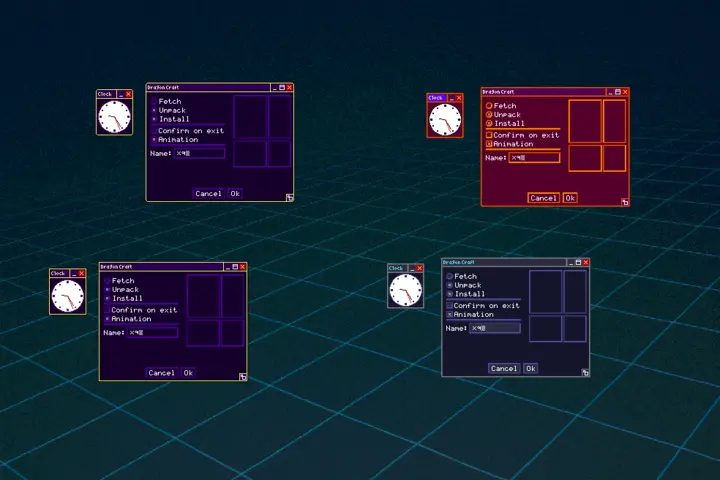
I’m working on a new design for the UI which is more presentable than what we have right now:
The tool used for the pictures is Aseprite, which I can fully recommend for paletted/pixel based image editing.
15th April 2025
Author: xq
The case prototype is now fully assembled:
This proved the case design works in general, but it still has no connectors, which means it’s not sure if everything would fit as planned.
12th April 2025
Author: xq
GUI branch news flash: We have a “game”, running with 3 FPS on the RP2350:
The “game” is actually a port of the raycaster from my demo Burn It Down! running on an LPC1768 with 100 MHz and 2 × 32 kB of RAM.
The low frame rate on the RP2350 is due to the demo rendering in column-major order, bottom-left to top-right. The PSRAM cache really doesn’t like this access order and each pixel written is basically a cache miss.
9th April 2025
Author: xq
The metal parts I’ve ordered in January finally arrived and I had time to assemble it:
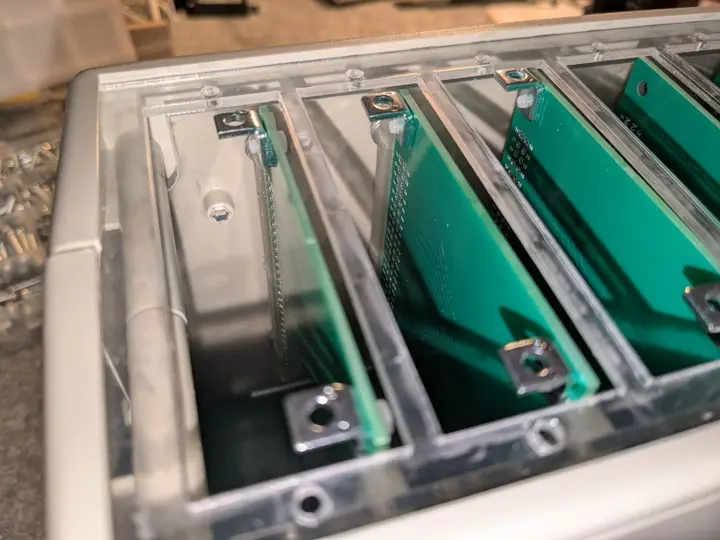
I also figured the PCBs need guides so you can hit the slot in the case much easier.
A friend 3D printed them, but they are a bit too tight in fit.
A problem now is that as soon as the front plate is in, it’s basically locked tightly and you cannot remove it without a suction plate or shoving the PCB out through an open slot next to it.
1st April 2025
Author: xq
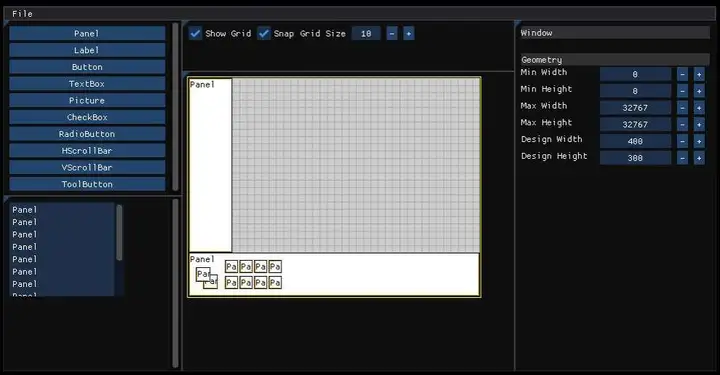
April is starting with some more improvements on the GUI editor: